The Truth About Quitting Smoking
Jan 23, 2026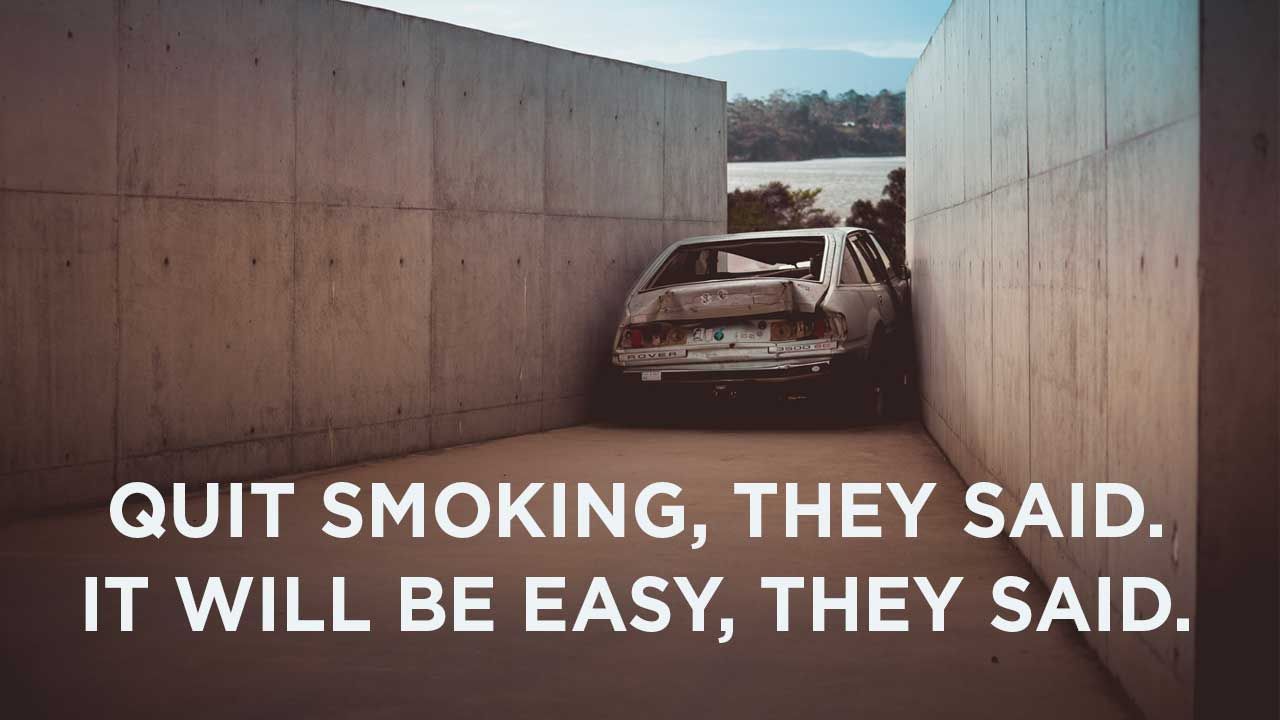
Make no mistake. You CAN become free from cigarettes. But will it be easy? Probably not.
Health, love, sex, and money. Books, products, and programs are littered with these topics, promising to give you a secret that will change everything for you. These are billion-dollar industries for a reason. We all want and need these things, and our brains make us susceptible to wanting them with little or no effort.
Remember this good old parental advice: “If it sounds too good to be true, it probably is.”
You won’t get the results without following the process required to achieve them.
Three Truths and A Lie
-
You can get free from cigarettes and smoking.
-
It takes commitment and sustained effort.
-
You must become a different person than you are today, i.e., change your identity to someone who doesn’t smoke.
-
It will be easy.
I’ll let you guess which is the lie.
About ten years ago, I was desperate to quit. Of course I wanted it to be easy, too! This is human nature and there’s no shame in being human. In one of my many internet searches for a quick fix, I stumbled across Alan Carr’s Easy Way to Stop Smoking.* I remember reading the reviews and testimonials and crying because I knew it wouldn’t work for me.
A better title for that book might have been, “The Simple Way to Stop Smoking.” Quitting smoking is pretty simple. Simple is almost always better, but it’s rarely easy.
In hindsight, I can see that my belief that I could not quit was the real problem, not the book’s title.
But when someone tells you their product will help you easily achieve something your common sense and experience tells you is actually pretty difficult, you are wise to be skeptical.
This post is not a negative review of The Easy Way to Stop Smoking. A great many people have succeeded using this method, and you have nothing to lose from checking it out at your local library or investigating the online program. Carr was a former 100-cigarette-a-day chain smoker who quit after 33 years and became a millionaire from his smoking cessation books, seminars, and clinics. He died of inoperable lung cancer in 2006 after publicly stating it was a price worth paying because he had been able to “cure at least 10 million smokers.”
The “easy way” aims to help you remove the veil of denial from your positive associations with smoking and see them for what they are: an addiction to nicotine that is “1% physical and 99% mental,” according to Carr.
His premise is that when you realize the unpleasant effects of nicotine withdrawal are actually caused by smoking and renewed each time you light up or vape, you will no longer want to keep smoking. Then you can experience the truth of how short-lived the actual physical addiction to nicotine is—only a few days.
Also according to Carr, all the unpleasant feelings you might experience after the nicotine has completely left your system result only from your thoughts about how badly you want to smoke, but can’t. He advised that you change your thoughts of deprivation and negativity to positive ones. For example, instead of saying you want a cigarette and can’t have one, say, “Isn’t it great I’m free!”
Alan Carr may have been right about my own brain being the cause of my suffering more than my physical addiction to nicotine. But so what? His method wasn’t easy, and it didn’t work for me.
I needed more space for imperfection. I needed to give myself permission not to end my physical addiction to nicotine and to be okay with using longer term nicotine replacement therapy before I was finally successful in beating my addiction to smoking.
If you’ve also found that the “Easy Way” didn't work for you, please don’t beat yourself up or believe that quitting isn’t possible for you. We are all different. The exact method or form of support that works for one person may not work for another. Your beliefs and mindset play a HUGE role in your persistence, which will lead to your ultimate success.
However, there are certain science-based strategies for behavior change that give anyone a leg up in their efforts. I detail these strategies—step by step, in the most effective order to follow them—in this post, and in my book, Quit Smoking for Good, From Hopeless Smoker to Healthy Non-Smoker in Five Simple Steps.
If you’re struggling with your belief that you can quit, or your mindset, or any other aspect of quitting, I’m here to help because it is my mission to help other women get free from smoking. I understand the specific addiction difficulties of experiencing childhood trauma, starting at an early age, putting other people’s needs ahead of your own, and thinking of smoking as one of your only rewards or stress relievers. It doesn’t have to be.
You can sign up for my group program, or contact me directly for one one one support.
An earlier version of this piece was originally published in A Newsletter for Quitters on Substack on June 11, 2023.
* This is an affiliate link and I will earn a small commission if you use it.
Let’s Stay in Touch
Get personal stories, inspiration, and updates to support your smoke-free journey — even if you’re just thinking about quitting.
We hate SPAM. We will never sell your information, for any reason.